How do we measure the loyalty one has to a specific major sports franchise? Some say it’s how much we know about the team. Others say it’s how much merchandise we may have. For the organization, it’s the amount of demand there is for its season tickets.
According to Zhang and associates, season ticket holders account for 80% of an organization’s sales (Zhang, Connaughton, & Vaughn, 2004). This got me thinking about purchasing season tickets in the future. Since I live in the Greater Toronto Area (GTA), I looked at the Toronto Blue Jays’ season ticket prices. After doing some calculations, season premium infield seats for the 2019 season are about $78 a game. That is a fairly reasonable price considering one-game equivalent is around $150.
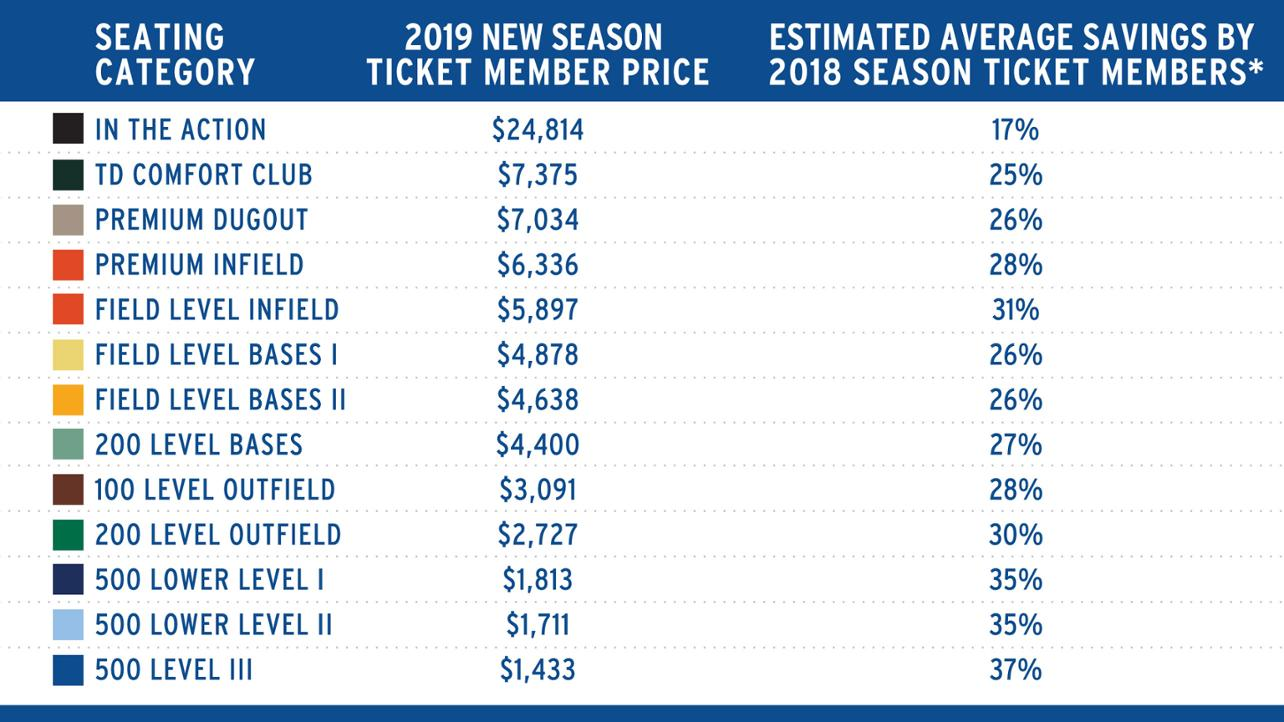
One thing I didn’t find was a discount on purchasing food and beverages. Considering the high tax rate in Ontario, consumers, including yours truly, would be discouraged to buy season tickets without food and beverage discounts. The average Major League Baseball (MLB) game is around 3 hours (Brown, 2018). Considering arriving early to observe batting practice or autograph sessions, one probably spends upwards of 5 hours a game. Therefore, the consumer can realistically expect to spend on food during the game. I would strongly advocate for some sort of food discount to enhance the experience during the game.
Thanks so much for reading my first post. In the comments section, I would love to know what your favourite sports teams are and what would it take for you to buy season tickets.
Signing off for now,
Martin
References
2019 Season Ticket Memberships. (2019). Retrieved from https://www.mlb.com/bluejays/tickets/season-tickets#core-benefits
Brown, M. (2018, April 9). Early Numbers Show How MLB Pace of Play is Trending. Retrieved from Forbes: https://www.forbes.com/sites/maurybrown/2018/04/09/early-numbers-show-how-mlb-pace-of-play-is-trending/#67cad5643e1f
James J Zhang, Daniel Connaughton, Carrianne E Vaughn, (2004) “The role of special programmes and services for season ticket holders in predicting game consumption”, International Journal of Sports Marketing and Sponsorship, Vol. 6 Issue: 2, pp.22-39, https://doi.org/10.1108/IJSMS-06-02-2004-B005
 Tin and Martin's Blog